
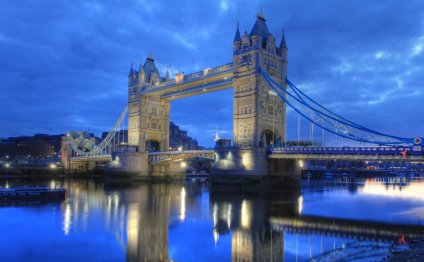
Interesting facts about London England
The City of London is the largest city based on population and is the capital of the United Kingdom as well as England. London is also one of the largest urban areas in the entire European Union. London's history goes back to Roman times when it was called Londinium. Remnants of London's ancient history are still visible today as the city's historic core is still surrounded by its medieval boundaries.
Today London is one of the world's largest financial centers and is home to more than 100 of Europe's top 500 largest companies. London also has a strong governmental function as it is the home of the UK's Parliament. Education, media, fashion, arts and other cultural activities are also prevalent in the city. London is a major world tourist destination, features four UNESCO World Heritage Sites and was host to the 1908 and 1948 Summer Olympics. In 2012, London will again host the summer games.
The following is a list of the ten most important things to know about the City of London, England:
1) It is believed that the first permanent settlement in present-day London was a Roman one in around 43 B.C.E.
It lasted for only 17 years however, as it was eventually raided and destroyed. The city was rebuilt and by the 2nd century, Roman London or Londinium had a population of over 60, 000 people.
2) Since the 2nd century, London passed through the control of various groups but by 1300 the city had a highly organized governmental structure and a population of over 100, 000. In the centuries following, London continued to grow and became a European cultural center because of writers such as William Shakespeare and the city became a large seaport.
3) In the 17th century, London lost one-fifth of its population in the Great Plague. Around the same time, much of the city was destroyed by the Great Fire of London in 1666. Rebuilding took over ten years and since then, the city has grown.
4) Like many European cities, London was highly impacted by World War II - especially after the Blitz and other German bombings killed over 30, 000 London residents and destroyed a large part of the city. The 1948 Summer Olympics were then held at Wembley Stadium as the rest of the city rebuilt.
5) As of 2007, the City of London had a population of 7, 556, 900 and a population density of 12, 331 persons per square mile (4, 761/sq km). This population is a diverse mix of various cultures and religions and over 300 languages are spoken in the city.
7) The main topographical feature of London is the Thames River which crosses the city from the east to the south-west. The Thames has many tributaries, most of which are now underground as they flow through London. The Thames is also a tidal river and London is thus vulnerable to flooding. Because of this, a barrier called the Thames River Barrier, has been built across the river.
8) London's climate is considered temperate maritime and the city generally has moderate temperatures. The average summer high temperature is around 70-75°F (21-24°C). Winters can be cold but because of the urban heat island, London itself does not regularly receive significant snowfall. The average winter high temperature in London is 41-46°F (5-8°C).
Video on topic: Interesting facts about London England



Share this Post
Related posts
Interesting facts about London
This Sunday, 13th April 2014, nearly 40, runners will take to the streets of London to take part in the annual London Marathon…
Read More
Key facts about London
Richard “the worst man in the world” Roper may have left our screens now that The Night Manager is over but there’s plenty…
Read Morelatest post
-
 Tower Apartments London October 16, 2026
 -
 Tower of London tube station October 9, 2026
 -
 Royal residence Windsor October 2, 2026
 -
 Tower of London Admission September 25, 2026
 -
 Interesting things about London September 18, 2026
 -
 Windsor Castle pub Hounslow September 11, 2026
 -
 Windsor Castle paintings September 4, 2026
 -
 Strange facts about London August 28, 2026
 -
 Entry to Windsor Castle August 21, 2026